Walls that speak
Exploring Graffiti Culture
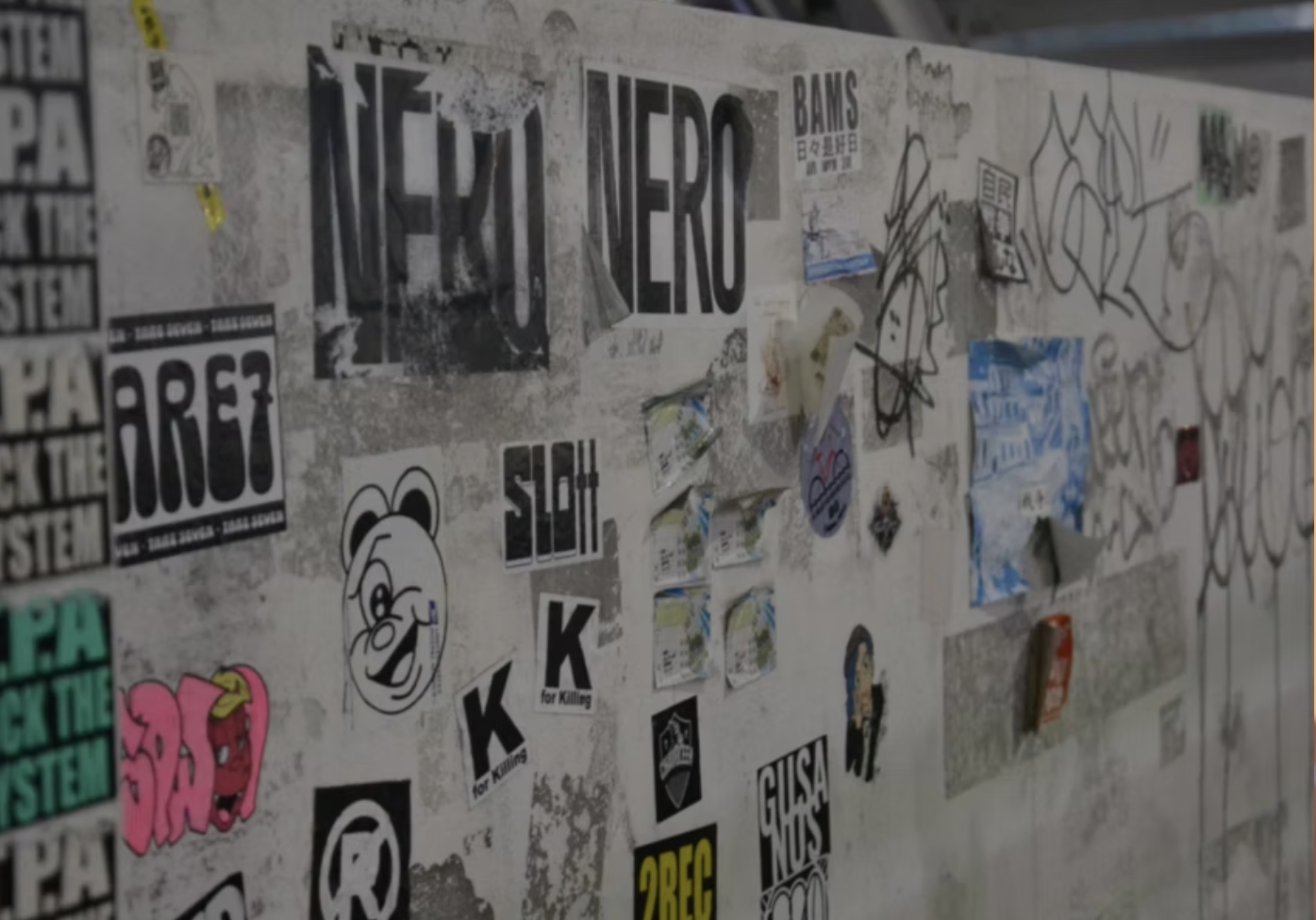
In a Shibuya alleyway, graffiti artists have transformed a wall into a canvas for a modern display of urban expression, reflecting a unique subculture within Japan's typically sanitised, orderly streets.
Graffiti, defined as stylised writings and drawings illegally created on public spaces, has historically been a tool for political and artistic expression. In the 1970s, street gang members would write their pseudonyms on subway carts and walls to establish territory. Over time, graffiti evolved as artists moved to rooftops and discrete locations to evade the progressively stringent law enforcement. By the 1980s, graffiti became increasingly refined as artists honed their talent, serving as a medium to voice frustrations about systemic issues like racial oppression and social immobility while showcasing technical skills. Today, the line between illegal graffiti and avant-garde art has blurred, leading to greater acceptance. Governments and businesses now commission artists to beautify urban spaces and add culture to otherwise drab buildings.
According to a 2023 NUS article, Singapore’s government hopes to encourage street art in Singapore to create a ‘world-class home’. While creating new tourist spots, street art places can also increase Singapore’s economic clout by shifting outside perceptions of Singapore’s culture. Artworks like Aliwal Street Mural by Didier 'Jaba' Mathieu, and Kampong Gelam's Mural Walls, all include elements of graffiti infused with modern street art techniques.
In Japan, where the graffiti culture is heavily regulated, there are only a few neighbourhoods in which the most accumulation of graffiti can be found. According to Sabukaru, a 2021 article, such places are located in Tokyo central, such as Shibuya, Harajuku and Shinjuku. These places are also considered the most chaotic, and "dirty" of all of Tokyo. Yet, ironically, they attract the most attention among locals and tourists.
When asking Japan locals their opinion on graffiti, 19-year-old Maeda Daichi said, “My initial impression of graffiti is creative control and artistic expression.”
Daichi also mentioned that graffiti can sometimes give the impression that a country does not prioritise the conservation of public spaces, with the lack of regulation potentially making a city appear unruly or even unsafe. However, he believes that when graffiti avoids profanity or offensive content, it can enhance the city’s vibrancy.
“It depends on the intent behind the message the person is trying to convey,” Daichi said.