Coal redefined in Indonesia's future energy security
Under declining coal reserves, the role of coal in Indonesia's energy security future will be uncertain
The coal industry in Indonesia has evolved from a small colonial mining sector into the world's largest thermal coal exporter. Coal has become a backbone of Indonesia's economy and energy system. For millions of Indonesians, the same is true.
A finance clerk who relocated from Java to Kalimantan to pursue work in mining, Dewi makes the drive to office before dawn. She walked past ground stripped to its mineral colour, past the diggings that have been widening toward the forest and settlements for as long as she has worked there.
Millions of others joined her pursuit, the truck drivers, canteen operators, engineers, miners, all remittances come out of a payroll funded by thermal coal shipped to power stations.
Indonesia produces more thermal coal for export than for domestic use, with more than 60% of production designated for overseas markets. Much of the coal extracted from forests in Kalimantan ends up heating homes in China, powering factories in India Japan.
As Indonesia lost its environment and villages, others countries gained coal that fueled their economic growth.
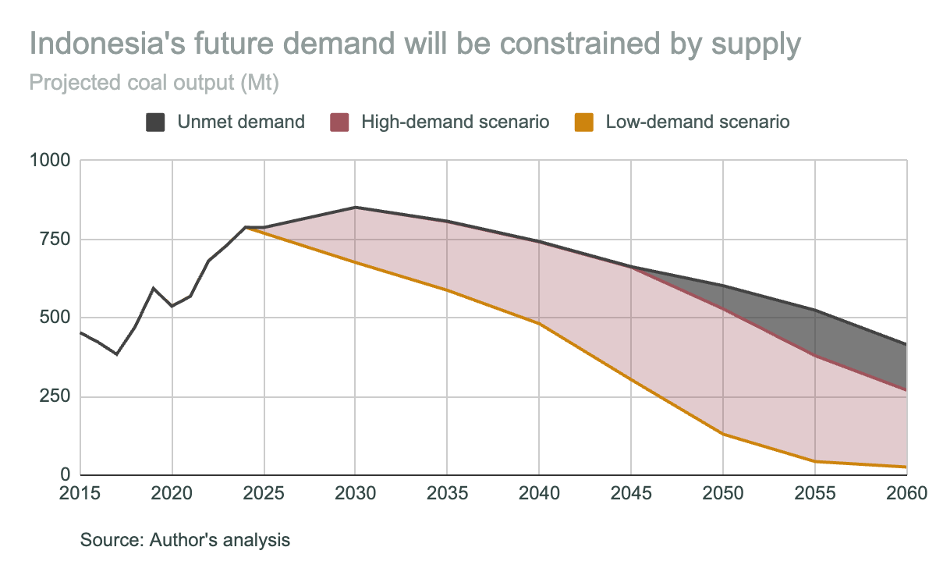
Our research estimates Indonesia's coal demand is expected to peak in 2031, declining afterwards. The aggressive rising of coal demand before peak year will deplete the reserves, shrinking domestic supply, placing pressure on state revenues, coal-dependent regions and workers tied to the industry.
Since this is a foreseeable scenario, managing long-term production strategically could mitigate the shocks.
High production generates near-term revenue but depletes reserves faster and narrows Indonesia's room to use coal for future domestic energy security, whereas aligning production with long-term demand extends reserve life and reduces the risk of oversupply and stranded infrastructure.
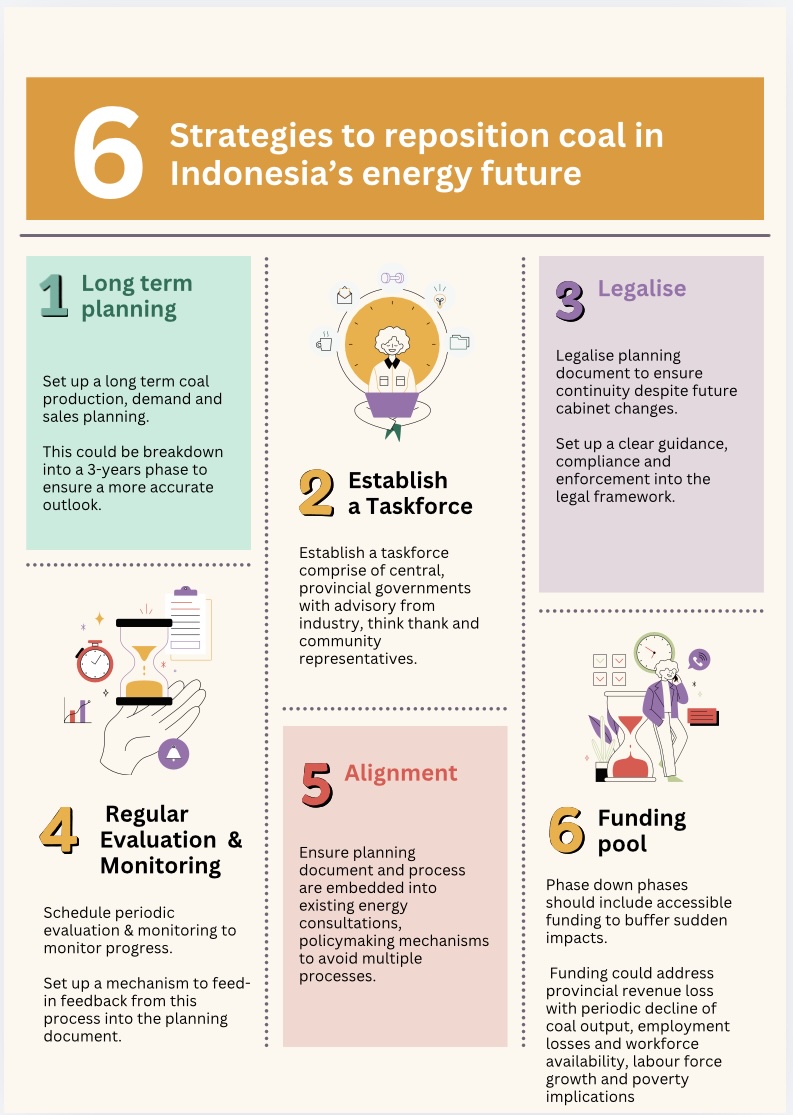
Production planning should therefore integrate demand projections, reserve availability and regional production capacity. Breaking reserve management into designated task forces, periodic quota reviews and stages for long-term planning could make an otherwise overwhelming task more manageable.
This also means having an honest discussion among policymakers, industries and communities about what the future could look like without coal.
Changes are often difficult. Governments frequently resist them for fear of destabilising investment and politics. Good changes however, are encouraged.
The IEA projected capital flows to energy in 2026 is set to reach an all-time high of USD$ 3.4 trillion. Majority of it will go towards renewables and grids.
For Indonesia to keep coal dependence is not only an energy security exposure, but also an investment risk.
Setiawan, D, Setyawati, D, Maulana, M.R., Indonesia’s coal production outlook to 2060: National and provincial scenarios. Just Transition Network