Female Education Polytechnic Graduates Surged in 2019 - Here's What Really Drove the Spike in Singapore's Teaching Pipeline
A glance at data of polytechnic graduates from the Ministry of Education (MOE), National Institute of Early Childhood Development (NIEC) & all of Singapore’s polytechnics reveals an eye-catching jump in education graduates, nearly doubling from 441 in 2018 to 1,003 in 2019. The surge came almost entirely from female graduates (94 per cent), yet the story behind this spike is more complicated than it first appears.
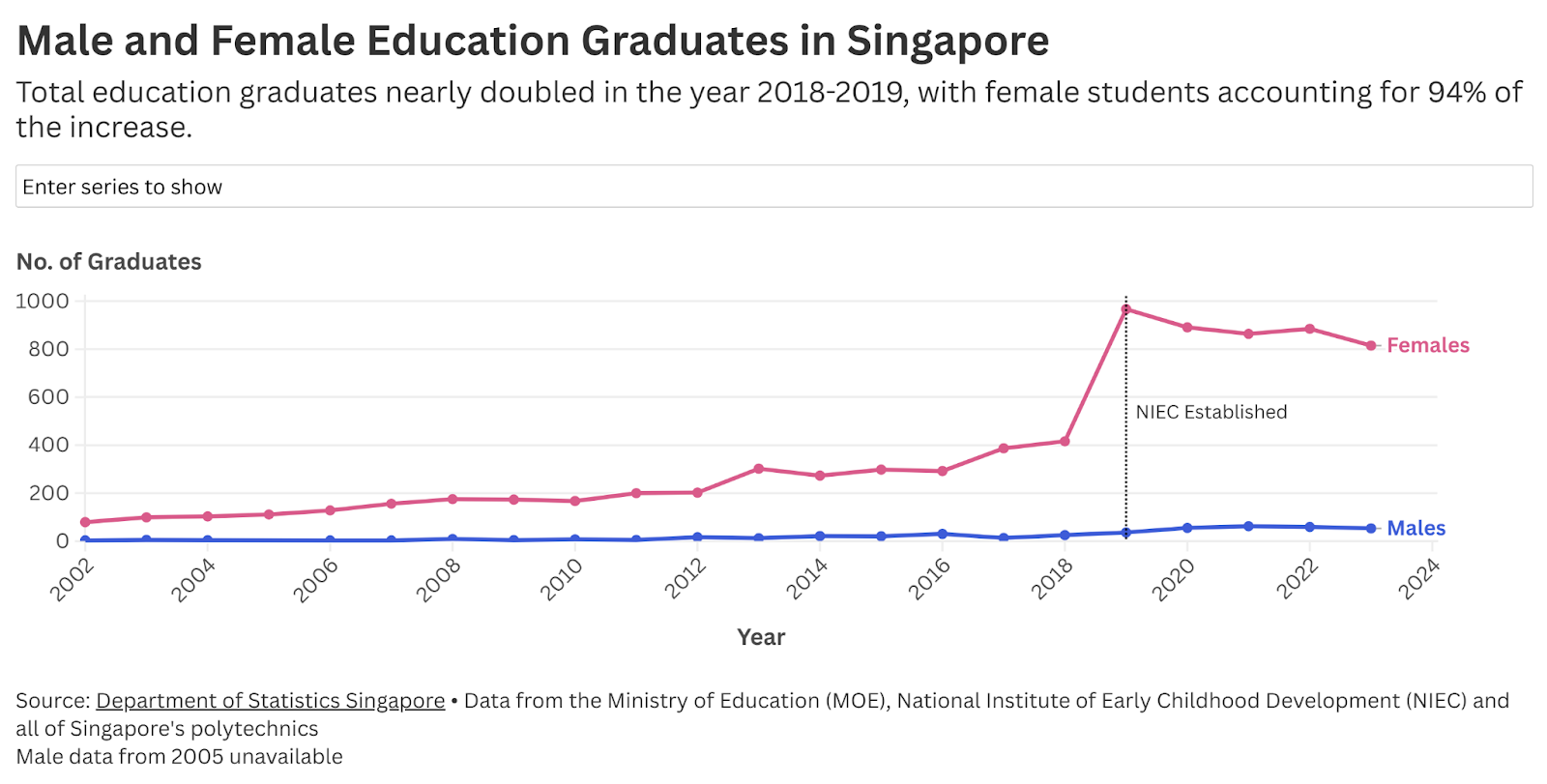
Much of the increase stemmed from a policy-driven expansion of the Early Childhood Education (ECE) sector. The 2019 launch of the NIEC centralized and expanded training capacity, creating a clearer career pathway for educators.
Associate Professor Tan Eng Thye, Jason, 62 (National Institute of Education, NIE) describes this period as a “policy inflection point,” noting that Ministry of Education’s (MOE) becoming more involved in ECE explains why “you can see this surge... in provision and in recruitment and in quality assurance frameworks.” The expansion supported the rapid growth of MOE Kindergartens.
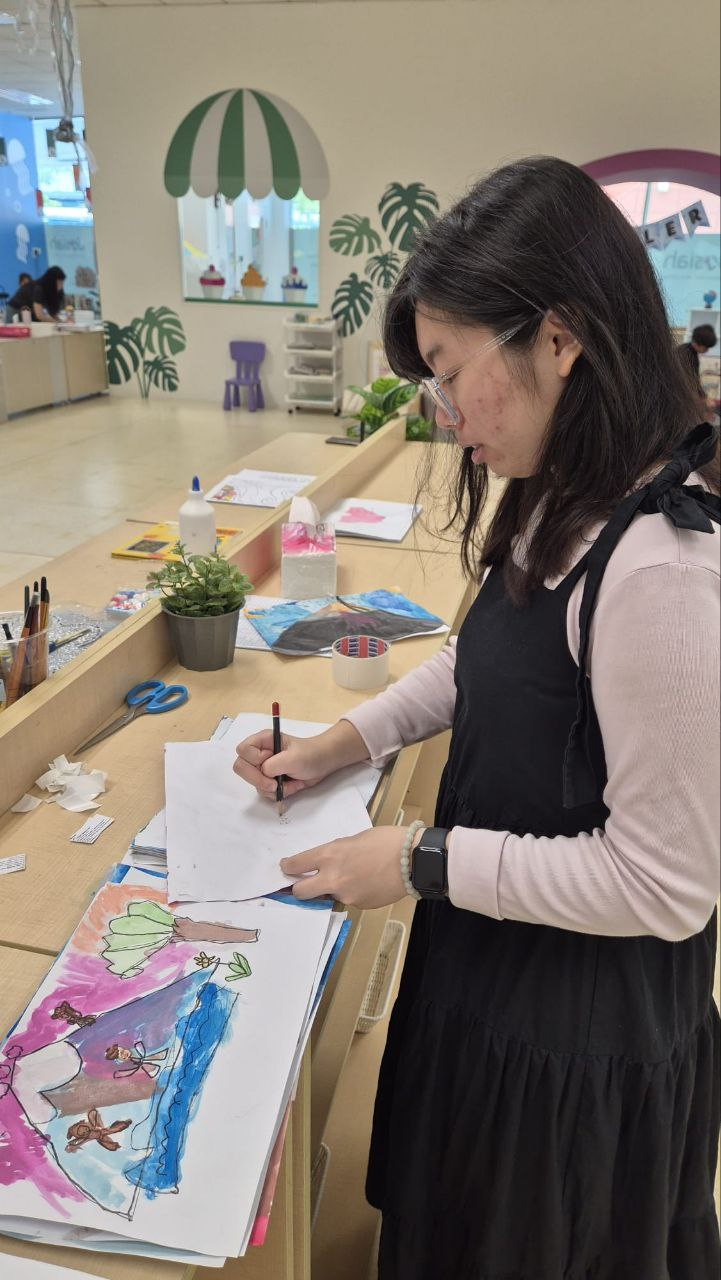
This commitment also shaped how young graduates viewed the field. Early Childhood Educator Teng Seen Yee, 22, says, “It’s always hiring, so it’s a rather stable profession to me, since early childhood is related to the government,” reflecting how perceived job security continues to draw new entrants.
Two other long-standing factors made the surge possible: ECE’s traditionally lower entry requirements and typical gender norms.
Prof Tan notes that ECE has long been the “poor cousin” of other teaching tracks in terms of required qualifications. This made it possible to scale up training quickly without imposing degree-level standards that would slow recruitment.
Simultaneously, the expansion tapped into a workforce shaped by gender expectations. Prof Tan observes that the heavy female dominance “actually serves to discourage more men from taking up the job,” since many still view the field as “women’s work.” As a result, when the pipeline grows, it grows mostly with women.
While the influx solved staffing shortages, it also highlighted ECE’s lower professional standing. Without a mandatory degree requirement, salaries remain constrained.
Prof Tan explains that raising the bar would “quite logically mean a pay rise,” helping to boost the job’s prestige. Until then, he says, ECE is “still not equal partners on the same footing as primary, secondary, JC.”
This gap remains, despite the government stressing the developmental vitality of the early years.
For new hires, these problems show up daily. Ms Teng says shortages remain widespread: “I think all centres lack a lot of manpower, so whether MOE increased more kindergartens or not, they will still be hiring regardless.”
She adds that her cohort faces “low salary, high workload with zero to no work-life balance, and a slow professional development.”
Despite this, she says the “main incentive” remains the children, whose growth keeps educators committed to the sector, adding that "tough days feel better when I look at the children."
Keyword Tags: Ministry of Education (MOE), Early Childhood Education (ECE), education policy, gender disparity