Breaking Free: Where Youth’s Movements Become Mindfulness
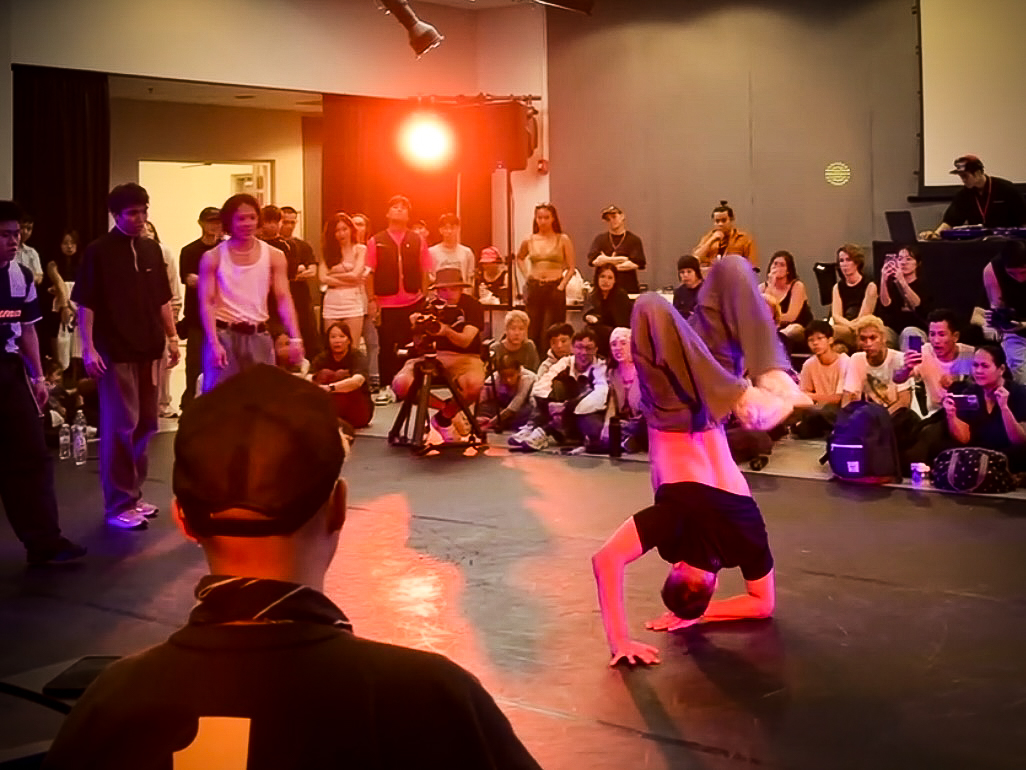
Breakdancing’s debut at the Paris 2024 Olympics signals its global rise, and in Singapore, more youths are turning to the sport for fitness, creative expression, and a space to unwind.
Originating from the Bronx in New York during the 1970s, Breakdancing, also known as breaking, has evolved from a form of street expression into a globally recognised sport and art form. In recent years, it has steadily gained traction in Singapore, where young people are embracing it not just for performance but for its physical and mental benefits.
As a dance form that combines movement, rhythm, and creativity, breaking offers more than self-expression. It also doubles as a physically demanding workout and a means of stress relief. A narrative review published in May 2025 in the Psychology of Sport and Exercise shows that certain aspects of dance have stress-relieving effects, such as music listening and physical activity.
This finding is particularly relevant in Singapore, as according to a 2024 study by the Institute of Mental Health, one in three youths has “reported experiencing severe or extremely severe symptoms of depression, anxiety and/or stress.”
Beyond mental wellness, breaking also challenges the body. A blog by local dance studio Legacy Dance co notes that dance helps to build agility, balance, and stamina, just like traditional sports. It also develops confidence and discipline, while encouraging dancers to tell stories through movement. This supports holistic growth in an individual, benefiting both physical and mental wellness.
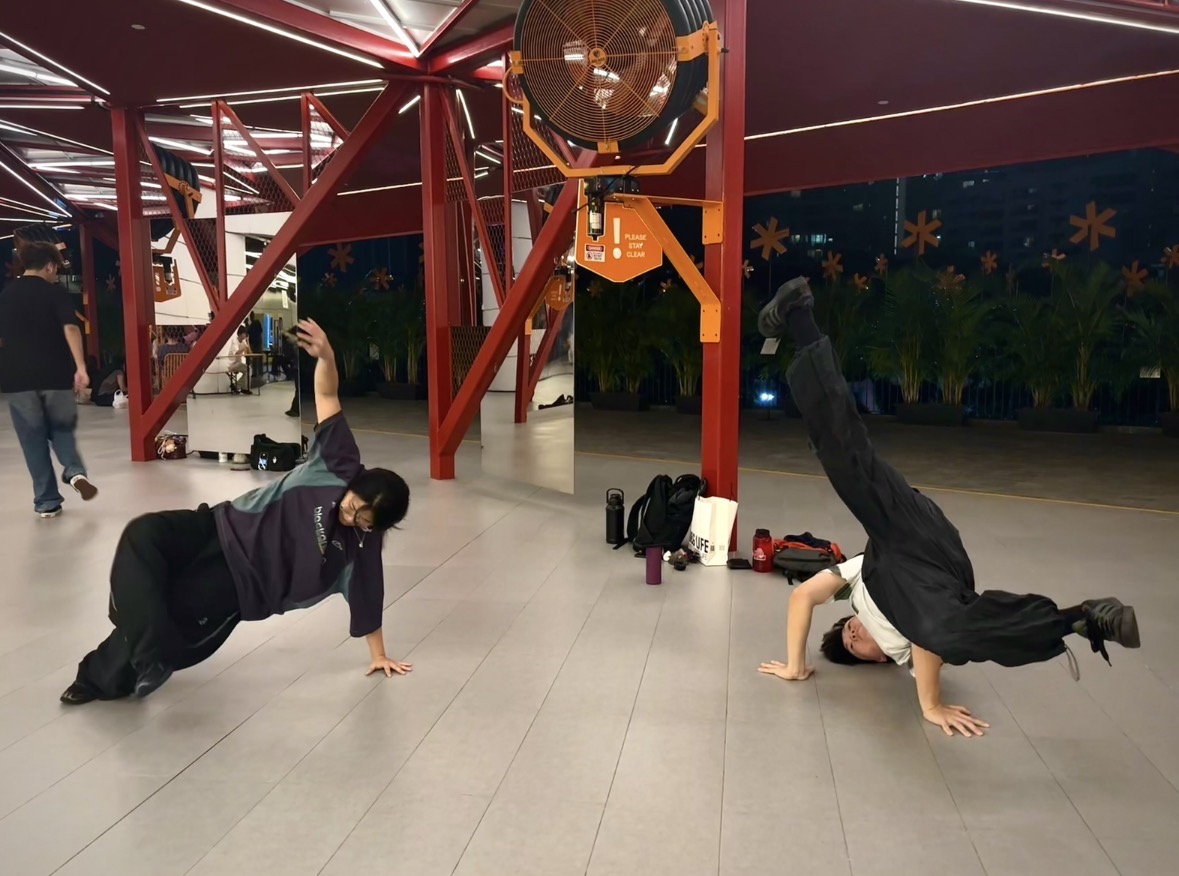
Across Singapore, breakers can often be spotted gathering for a “sesh”, short for “session”, at familiar spots such as *SCAPE, Singapore Management University (SMU), and the Esplanade. These informal meet-ups are central to breaking culture, serving as spaces where dancers train together, exchange ideas, and build friendships.
During these sessions, B-boys and B-girls practise moves side by side, encourage one another, and sometimes even form new connections on the spot. Over time, these shared experiences help foster a close-knit community rooted in mutual growth.
For Yap Jun Kang, 24, an alumnus of Ngee Ann Polytechnic’s B-boys club “mightynomads”, interacting with others is an essential part of breaking culture. He believes it allows individuals to grow beyond dance, as “you are able to learn more things along the way”.
To Jun Kang, breaking represents both art and freedom.
“It’s like when you watch a movie, or like, when you see something in front of you, you’re able to think of something relating to that and make it your own breaking move.”
Drawing inspiration from everyday experiences, he finds that breaking offers limitless room for exploration and creativity. However, the journey is far from easy. He explains that breaking consists of four main components: yoga, gymnastics, hip-hop, and breaking itself, all of which dancers must learn simultaneously, making progress physically demanding and often slow.
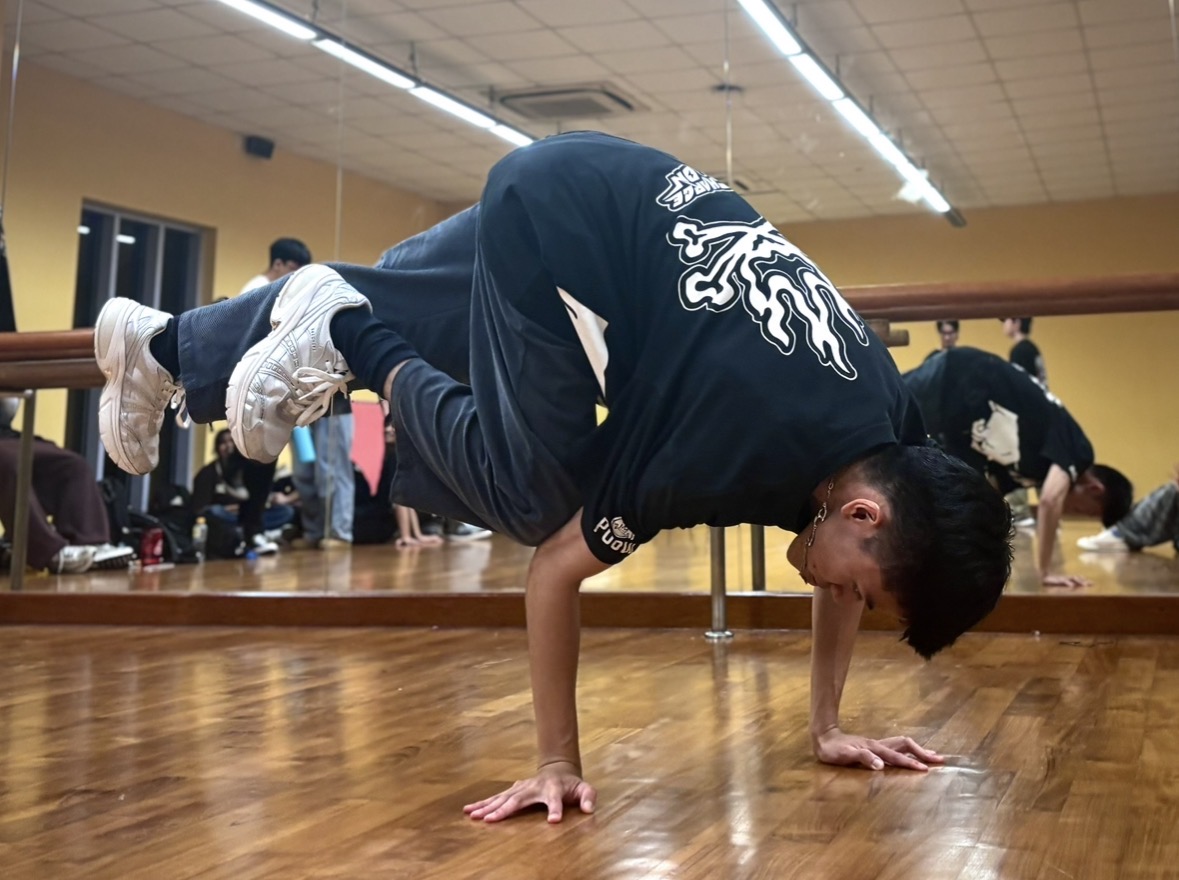
There are times when burnout sets in, but what kept him going was the support from his friends and seniors. With the right people, he explains that “you’re able to push each other” and at the same time share goals.
When it comes to mental wellness, he agrees that it helps to relieve stress, especially when feeling moody. However, he emphasises that it should not be treated as a sole coping mechanism, as overdoing it may turn a passion into something negative.
The importance of community support is echoed by B-boy Mahmud, a pioneer of Singapore’s breaking scene and a member of the iconic Radikal Forze breaking crew, who now coaches “mightynomads”. Reflecting on the 1990s to 2000s, he recalls a time when the scene was “very very bonded.”
“Back then there’s no SCAPE, back then there’s only youth park, which is the opposite of SCAPE. There will be hundred over breakers down there.”
Not just breakers, though. Emcees, graffiti artists, lockers, and poppers were all there. People with diverse backgrounds gathered in the same space, forming a shared culture that laid the foundation for today’s community.
Mahmud also shared how breaking helped him and many others support their mental and emotional well-being.
“I use breaking as a strength for me, to distance myself from whatever stress I have.”
Through that process, he saw many B-boys endure difficult moments and emerge stronger, not just mentally, but also in their breaking, which is a journey mirrored by younger breakers today.
Like Mahmud, Jun Kang sees breaking as more than just movement. It is a practice that shapes resilience, discipline, and mindset beyond the dance floor. On days when fatigue sets in or motivation runs low, he believes that showing up still matters, whether at training, a session, or a jam.
“But you need to tell yourself that, hey, although I don’t like it, although I feel very bad today, I still do what I do.”