The Tuition Crisis
Singapore's Tuition Crisis
The Price of A's: How Tuition is Rewriting Our Future
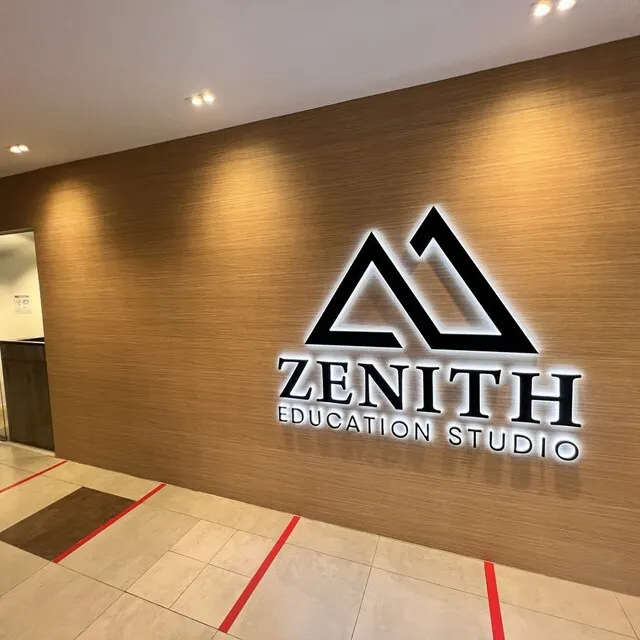
Zenith is one of the many tuition brands in Singapore, with 11 centers built across the island. Demand for Zenith has soared so high, that it might need an air-traffic control soon. For children as young as 7 to teenagers as old as 18, tuition isn't just a place to study, rather its practically a daily pilgrimage in the Singaporean academic journey. Zenith is not alone in supplying accelerating demand for tuition, existing alongside other common names such as AGrader Learning Centre, MindChamps, Raymond Math and Science Studio just to name a few. Tuition centers are sites where parents drop tens of thousands a year to give their children that edge over others. Since 2019, over 20,000 students have joined Zenith as it basks in high compliments from graduates, I must say I envy that. Every day and every week, after the dread of school, students drag themselves home - only to immediately leave again for tuition. For some, it’s like a second shift. For others, especially those who think school is a comedic tragedy, might find tution a godsend. A sanctuary where things actually makes sense.
In February this year, Dr Wan Rizal, MP for Jalan Besar GRC, raised concerns in Parliament about Singapore’s growing tuition industry - a topic that has become increasingly familiar in national discussions. Citing estimates that the tuition industry now stands at around $1.8 billion, he noted that the sector’s rapid expansion over the past decade could impact educational equity, particularly for students from lower-income families. This disparity is a threat to Singapore's meritocracy.
The promise of meritocracy is simple: Regardless of your background like race, sex, religion or socio-economic status, you will be rewarded based on your ability, talents and contribution. This is in contrary to nepotism. You may imagine it as rather than working, sweating and bleeding for money, you find out that your rich grandfather is dying. Best of all, you are his adorable little baby grandson. You spend his last dying moments, subtly hinting about why you are the best candidate for his enormous estate and funds. Whilst doing it under the guise of love, superficial as superficial gets. In the shadows lie a hidden war of family politics, as gorges within the family widens in an attempt to see who can squeeze the most out of your dying grandpa. Tragedy strikes, and overnight, you’re standing on a mountain of fortune. Furthermore you are now the confused new owner of a tortoise that looks like it personally knew Julius Caesar and is legally older than Singapore.
The story of the inheritance is real, but not the tortoise unfortunately.
However, the rise of the tuition industry creates an uneven playing field as not all students can afford the same level of extra academic support. Let’s explore this further!
I love chicken nuggets, it's true! I bet I love chicken nuggets more than you do.
According to a recent government survey by the Singapore Department of Statistics, families in Singapore spent a total of SGD 1.8 billion (USD 1.3 billion) on private tuition in 2023. This marks a 29% increase from 2018 and a 64% jump from 2013.
At this rate, tuition spending in Singapore could surpass SGD 2 billion in 2025, assuming an increase of 20% over two years from 2023. The rise of the tuition industry does not necessarily imply weaknesses in formal education, though such weaknesses exist. But it does suggest growing uncertainty and fear about the future of public schooling. As more parents and students begin to doubt the ability of public-sector teachers to adequately disseminate knowledge, their attention diverts toward privatized learning. They spend and splurge on the best tutors in their GRC, all in the name of securing their children’s future. And with money pouring into this industry, educators naturally stand to earn far more from private education than from the public system.
This surge in tuition money has tempted many educators. My own physics teacher abandoned us for Zenith... One day in class, the next in a branded polo shirt. Why has he forsaken us?
Either way, the high turnout for tuition - despite how expensive it is - is absurd. Who has that much money to spend? Turns out, it’s the folks sitting comfortably in the higher socio-economic brackets. With great purchasing power comes a great load of things they can buy, including education on tap. Families in the top 20 percent income bracket spent an average of SGD 162.60 per month, while households in the bottom 20 percent managed just SGD 36.30.
That is nearly a four times difference. Four times means a 300% increase. If your caifan costed $3.20, a 300% increase would mean it cost $12.80 - quite the hefty price. It is not just the rich spending more, but more of the rich spending on private tuition. Higher incomes enable them to easily access private education without feeling the additional financial strain. Thus, you're more likely to see someone with a high SES in tuition than some bloke like me, who did not have enough money to go to my dream school (SJI).
This disparity in accessing private education, undermines the principle of educational equity. Poorer students have fewer opportunities to get a leg up, even if they are lagging behind. However, the Ministry of Education has claimed that while tuition can help students who “genuinely need more dedicated help,” for students who are “generally coping well academically and understand the fundamentals,” “tuition may not be necessary and can even be detrimental.” Additionally, students who do not have access to private resources and require extra help can seek one-to-one support with teachers from their schools.
But is this fact truly facing reality? Firstly, teachers face a rather big burden, with large class sizes and workload that goes beyond the academic front. They reportedly face overwhelming admin work, the emotional toll of caring for unstable children and adolescents, and the constant grind of preparing for each lesson both before and after school. A 2024 survey found that Singaporean teachers work up to six hours more than their international counterparts. A figure that even the most caffeinated might not be able to stand.
It is hence unsurprising that teachers in the public education sector have taken a toll in their well-being. If it were you, would you rather spend your time teaching a smaller class size that is far more engaged, whilst being paid more or teach a larger class who is not as engaged and earn comparatively less? The most pragmatic choice is the former, clearly. Not only is the pay better (I love money), but it is much healthier. Yet, some brave souls have stayed on and endured teaching in public schools.
To that, I say, that only a fool sees a much better option and still says yes to the worse one. For the GP teachers analysing my work, I really wonder, why would you work more for less?



As schools struggle with manpower shortages, the quality of education declines in school, thus incentivizing tuition attendance. This is dangerous as it would mean that trust in public education is diminishing - schools might then be unable to equip students with adequate knowledge and skills both academically and holistically. Moreover, for those who cannot afford tuition, a thin line is drawn between success and suffering. As my ever so wise mother likes to say, if I do not study well, I will end up as a garbage truck collector with the aspiration of a janitor who ends up homeless, only eating the seven northern winds for food. But if my unlucky self gets lost in the curriculum, her prophecy might become true.
At the crux of this issue lies a worrying question. If public education ever becomes unreliable enough that tuition feels necessary, can Singapore’s meritocratic system truly hold? The consequences are far reaching. It shapes our future leaders in ways we may not like, producing disconnected elites rather than grounded individuals. We risk becoming a society where growth and status is determined less by effort or ability, but more by how much a parent can afford to spend on schooling. In fact, this trend has already earned Singapore the label, "Parentocracy”. Your parents wealth and influence plays a growing role in determining your educational trajectory - and that is the core of the tuition crisis.
Google’s former HR head Laszlo Bock, have stated that GPA is essentially worthless as a predictor of job performance because the work environment differs significantly from academic settings. Moreover, studies from the American Psychological Association (who has given me a lot of headache with their citation formats) have signaled the irrelevance of academic stature. Resulting in greater emphasis on co-cirricular activities, not just in America, but in Singapore as well.
While a holistic education that encompasses values, hobbies and academics is highly important, the continuous rise of the tuition industry highlights a tighter fixation on the academic performance of students.
Moreover, an academic oriented view of an education system is a highly dangerous one. It slowly reduces learning to a narrow contest of memory and compliance. Examinations take center stage and students are pushed toward surface learning. It encourages rote recalling, rehearsed answers, and rigid thinking - rather than the curiosity and deep understanding that true education requires.
Such systems also come at a heavy emotional cost: young people subjected to perpetual pressure report high levels of anxiety, fear of failure, and burnout, as seen across countries with exam-centric models. Beyond harming individuals, a hyper-academic culture deepens inequality by tying success to economic privilege; wealthier families can pay for tuition and enrichment, while poorer students fall behind in a race they never chose. Grimly, this is not exclusive to Singapore (more on that later).
Essential human capacities like creativity, empathy, collaboration, and problem-solving are displaced by the monolithic pursuit of stellar grades. Workplaces and societies then, inherit graduates who are technically competent yet struggles to adapt, innovate, or think independently. An entire nation, limiting our own potential by valuing test scores over the diverse skills needed for a changing world. In a sense, we are worshiping academics at all costs, ultimately forgetting what education is meant to be: the cultivation of whole. And worshipping academics we are, with our billions in cash paying this industry.

It is easy to think that Singapore’s tuition culture is uniquely intense, a local obsession blossoming from our kiasu culture that spiralled into an industry, but we are not the main characters. Beyond our shores, there exists something sobering: this crisis is not exclusively ours. Rather, it is part of a regional pattern that stretches across East Asia - shaped by competition, fear of falling behind, and a society that believes schooling can and must determine a child’s worth.
Cram schools are supplementary education students, and stretches a day of studying to as late as midnight.
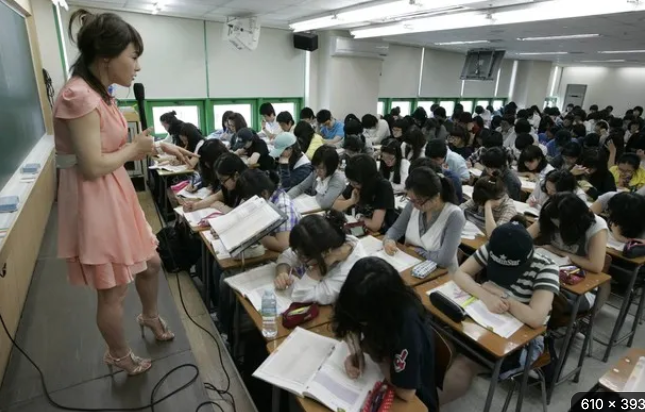
Across East Asia, the tuition crisis is far bigger than Singapore, stretching from the cram schools of China to the juku of Japan and the relentless hagwon culture of South Korea. In China, years of late-night tutoring and “shadow education” grew so extreme that the government finally banned most for-profit tuition. Yet the demand simply slipped underground as families remained terrified of their children falling behind. In Japan, students march from school to juku in a system long described as “examination hell,” where the pressure to enter top schools has been linked to exhaustion, depression, and some of the developed world’s highest youth suicide rates. South Korea’s situation is even more intense: students often study past midnight in hagwons, driven by a college entrance exam so feared that planes are grounded during the listening section to avoid disturbing test-takers.
While these countries differ in culture, they share the same emotional cost. Children lose sleep, joy, and mental health to a system that treats learning like warfare. To the paranoid, looking at the boy to their left and the girl to their right sparks a constant thought...
"Their success is my failure...".
And thus, a regional pattern of fear, competition, and misplaced belief that childhood must be sacrificed for a chance at success is born.
However, this is changing. Alternatively, a positive shift could be that these countries are focusing college admissions based on more holistic approaches such as extracurricular activities. South Korea has even started cracking down on hagwons like China. Nevertheless, critics argue that extracurricular creates added stress from having more workload - beyond studying, they also need to focus on other things. Other things that costs more money to access and learn. For the poor, this appears to be the only safe way out of the poverty cycle...
The sad, unfortunate truth is that the poor only has their will to rely on, while the rich has their wallet as convenient as Doraemon's pouch. Tuition and cram school are a luxury after all. In this crude reality, we must look for better ways of assessing merits and fairly distributing rewards and aid.
In recent years, Singapore’s Parliament has spoken with growing clarity about the need to ease academic pressure and rebalance childhood. Ministers have repeatedly stressed that tuition is not, AND I MEAN NOT necessary, that the national curriculum is designed to be learnable in school, and that no child should feel priced out of opportunity. These speeches marks an important shift: the Government is not defending the education system to the teeth but it is acknowledging its cracks and acting to mend them. New policies on curriculum load, assessment reduction, and support for disadvantaged families reflect a willingness to confront the tuition culture head-on, rather than accept it as an inevitable part of our landscape. With reference to the reworks on PSLE and 'O' score tabulation to progress in the education tracks and relenting on the importance of academic scores.
What gives Singapore a uniquely hopeful path forward is that education here is already heavily subsidised and affordable, designed to ensure no child is left behind. Laws in place like the Compulsory Education Act and the Edusave funds to ensure equal opportunities. Unlike countries where tutoring is seen as a necessity for survival, Singapore’s egalitarian system is currently strong enough that tuition should never have become essential - and increasingly, the Government is making that point explicit. At the same time, the digital world has changed the game. Knowledge is no longer guarded by textbooks and tutors. It is free, abundant, and a search bar away. Students today can learn coding, physics, languages, or even university-level content through open courses, online libraries, and global educational platforms. In a world where information flows so freely, the old fear of “missing out” without tuition simply holds less truth than ever before.

If this momentum continues, if Parliament keeps pushing for holistic education, if schools continue strengthening support, and if parents begin to trust that learning does not require excessive spending, then Singapore could genuinely turn the page on its tuition crisis. I suppose our happy ending would not come at the disappearance of tuition, but the disappearance of desperation. It is a future where every child can succeed without being overworked, where education remains high-quality but humane. With a strong government willing to act, and a world of free learning at our fingertips, Singapore is better placed than most to write that ending. A future where tuition becomes choice, being able to serve, not crush, the children it is meant to serve.
I googled and used A.I a bit to research. I wrote most of this on my own but had A.I polish a few paragraphs to make it digestible from my jargon and create the citations. For my sources, I googled, read and used the idea to write.
Story references for this template:
Ministry of Education Singapore. (2023, September 20). Desired outcomes of education. Ministry of Education Singapore. https://www.moe.gov.sg/education-in-sg/desired-outcomes
Ipsos. (2023, September 7). Singaporeans hold high opinion of teachers and the local education system. Ipsos. https://www.ipsos.com/en-sg/singaporeans-hold-high-opinion-teachers-and-local-education-system
Ministry of Education Singapore. (2020, October 22). Singapore students show strong intercultural communication skills & high ability to understand, act on global issues. Ministry of Education Singapore. https://www.moe.gov.sg/news/press-releases/20201022-singapore-students-show-strong-intercultural-communication-skills-and-high-ability-to-understand-act-on-global-issues
Tushara, E. (2025, January 19). Spending by S’pore families on private tuition rises to $1.8 billion in 2023. The Straits Times. https://www.straitstimes.com/singapore/spore-families-spent-1-8-billion-on-private-tuition-for-children-in-2023
Tan, R. (2025, April 21). Singapore families spent $1.8B on private tuition in 2023, here’s what that means for 2025. SmileTutor. https://smiletutor.sg/singapore-families-spent-1-8b-on-private-tuition-in-2023-heres-what-that-means-for-2025
Ministry of Education Singapore. (2019, October 7). Tuition [Parliamentary reply]. Ministry of Education Singapore. https://www.moe.gov.sg/news/parliamentary-replies/20191007-tuition
Chua, V., & Seah, K. K. C. (2022). From meritocracy to parentocracy, and back. In Y. J. Lee (Ed.), Education in Singapore (pp. 169–186). Springer. https://link.springer.com/chapter/10.1007/978-981-16-9982-5_10
Mowreader, A. (2024, October 8). Study: GPA not the best judge of work behavior. Inside Higher Ed. https://www.insidehighered.com/news/student-success/life-after-college/2024/10/08/should-employers-screen-candidates-using-gpa
Van Iddekinge, C. H., Arnold, J. D., Krivacek, S. J., Frieder, R. E., & Roth, P. L. (2024). Making the grade? A meta-analysis of academic performance as a predictor of work performance and turnover. Journal of Applied Psychology, 109(12), 1972–1993. https://doi.org/10.1037/apl0001212
University of South Australia. (n.d.). Deep and surface approaches to learning. https://lo.unisa.edu.au/mod/book/view.php?id=646503
OECD. (2017). PISA 2015 results (Volume III): Students’ well-being. OECD Publishing. https://www.oecd.org/education/pisa-2015-results-volume-iii-9789264273856-en.html
Bray, M., & Lykins, C. (2012). Shadow education: Private supplementary tutoring and its implications for policy makers in Asia. Asian Development Bank; Comparative Education Research Centre, The University of Hong Kong. https://unesdoc.unesco.org/ark:/48223/pf0000215438
Suzuki, M. (2013, November 12). Let’s talk about Japanese cram school. Tofugu. https://www.tofugu.com/japan/japanese-cram-school/