Narrative Arc
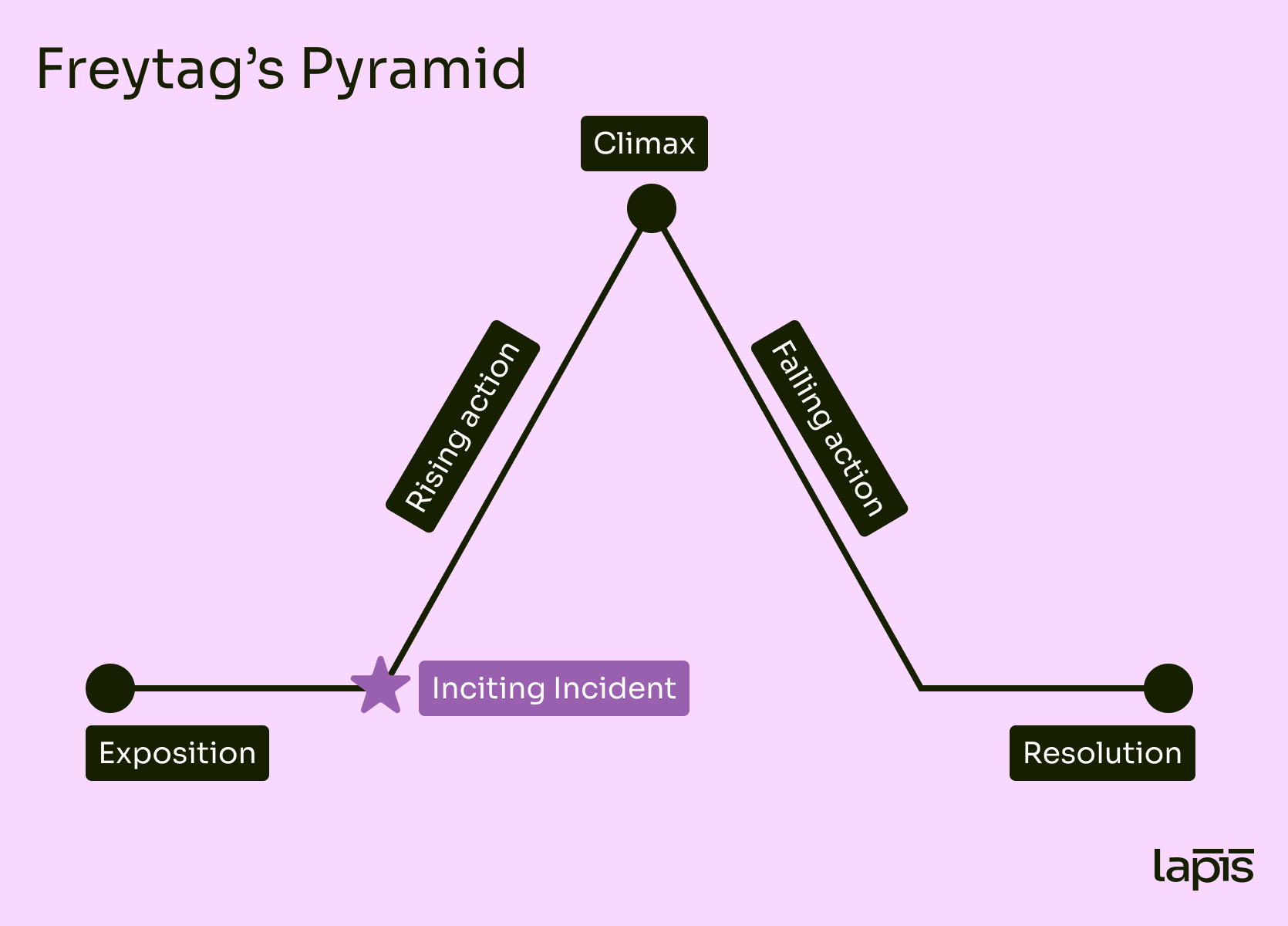
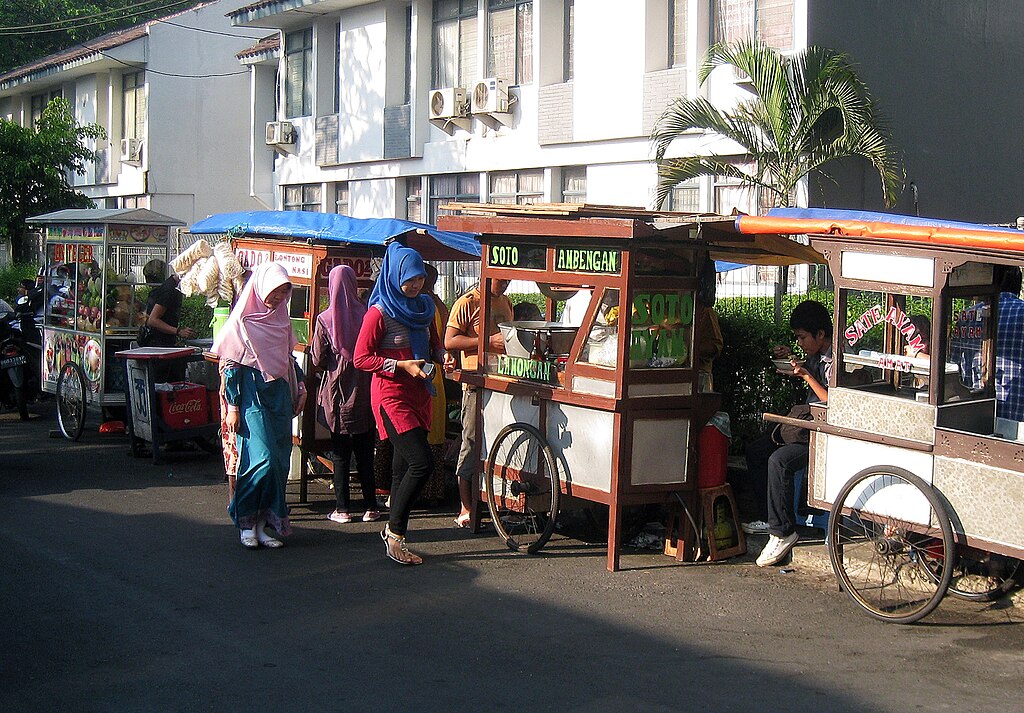
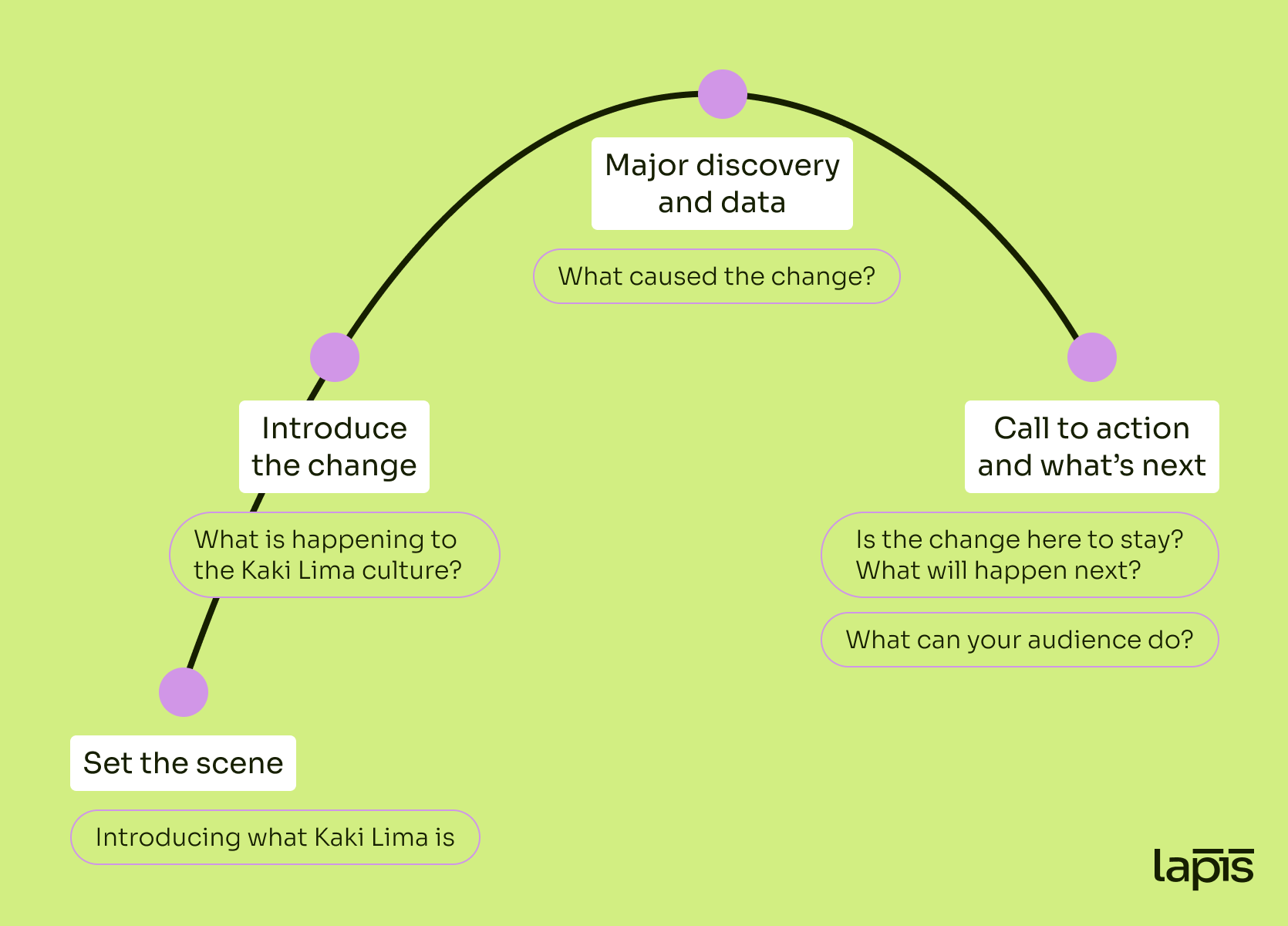
Start your story by providing background information and context for your reader. For example, 'Kaki Lima' are roadside food sellers that are an integral part of Jakarta's social fabric and culture. There are approximately 50,000 of them in Jakarta, selling food in baskets or carts and catering to the everyday lives of the locals. One of them is a seller named Hana, who has been pushing around a fried rice cart in Kramat Jati, East Jakarta for the past 10 years. This context helps to center your reader in a particular part of the world, and introduces them to a culture or practice that they might be unfamiliar with.
Or instead of an overview of the context, the same information can also be conveyed through characters to give it more of a human touch. For example, In Kramat Jati, a mother heads out to buy lunch and she decides to stop by a cluster of Kaki Lima sellers. She walks towards her son's favourite fried rice stall, run by a seller named Hana. Hana is one of the 50,000 roadside food sellers in Jakarta, and she has been pushing her cart around for the past 10 years.
Including images in your story can help set the scene more effectively.
Hey there!
This is where the scene starts to shift and you introduce what is changing in the current landscape that is affecting the initial context. The change can be both positive or negative. For example, the number of Kaki Lima have been dwindling and there are sellers lamenting that it is increasingly difficult to run a roadside stall, and over the years more sellers have decided to call it quits.
Alternatively, a positive shift could be that these Kaki Lima sellers are now find it less physically taxing to run their stall, thanks to the rise in mobile technology and food delivery services. These sellers no longer have to push their carts around different neighbourhoods to find customers, and they can choose to stay put in one place while waiting for orders to come in through their phones.
This is where you use data to explain the reasons behind the shift in the scene. For example in the negative example above, one factor behind the dwindling numbers could be due to the rise in gated communities that these roadside sellers cannot access and sell to. And this problem is further worsened by new governmental policies such as anti-hawker street clean ups and implementing mandatory licenses which can be expensive and complicated to obtain.
A line chart can be great for showing change over time, for example the number of street clean-ups across the years.
Or in the positive example of Kaki Lima adopting mobile technologies, you could explain factors such as effective campaigns by food delivery apps to onboard Kaki Lima as a key segment in their list of vendors, or that getting mobile phones and subscribing to a mobile plan is now affordable to most people, including roadside sellers.
This is where you begin rounding up your story by conveying what this change would mean, and what are some call to action or next steps you might want to encourage.
For example, the complicated process to obtain a license coupled with the fact that there have been more strict anti-hawker policies could mean that these roadside sellers will diminish even faster than before. Locals have already begun to feel nostalgic about Kaki Lima, and speak about it as though it is a thing of the past. However, there have been efforts and initiatives to protect and support the Kaki Lima in the recent years, like a particular program that helps these sellers with the necessary paperwork, for instance.
Alternatively in the positive example, you could say that how the Kaki Lima was supported to evolve in tandem with the changing digital economy signals how important and valuable this culture is to the people. The Kaki Lima might continuously evolve, but it will definitely still be around in the many years to come.
In all data stories, it is very important to list out any methodology used to process the data, as well as the references used in your story. This is to maintain transparency, and helps to build trust with your audience.
Story references for this template:
Kontinentalist, 'Jakarta's roadside food sellers', 2023. https://kontinentalist.com/stories/jakarta-roadside-food-sellers-challenges-in-future-technology