From Waves to Ripples:
Public pool numbers climb, but not to their peak
On weekend mornings, many public pools feel a bit different than what they were a decade ago. The splashes are softer, the lanes less busy, and the once crowded pools of recreational swimmers are now noticeably thinner. Singaporeans are still exercising more than ever in recent years, but fewer do it in the water.
According to a dataset by Sport Singapore (SportSG), public swimming pool attendances have been on the rise steadily since COVID restrictions were lifted, jumping from a total of 2.5 million in 2021 to 5.6 million in 2024. However, these numbers still fall short of the pre-pandemic average of 6-7 million total visits a year.
This gap of more than a million entries is striking, considering that national participation in sports has actually grown. In the National Population Health Survey 2024, it showed that “compared to 2023, the proportion of residents engaging in sufficient total physical activity (TPA) increased significantly from 78.5% to 84.7%, marking a return to pre-COVID levels.” So if more Singaporeans are keeping active, why aren’t public pools seeing a full return? This story dives into the ripple beneath the surface.
Part of the answer lies in the facilities. Closures of pools at locations such as Jurong East, Hougang, and Toa Payoh for upgrading and redevelopment can affect the numbers significantly. Freelance swimming coach Mdm Janlex Tan, who has been teaching since 2017, witnessed this firsthand. “A lot of pools are having revamps at the moment,” Mdm Tan stated. “For example, when Hougang is closed, some people don't want to travel out too far away.” She also mentioned that both Hougang and Ang Mo Kio swimming complexes were closed at the same time, and though Sengkang remained open, it became heavily overcrowded.
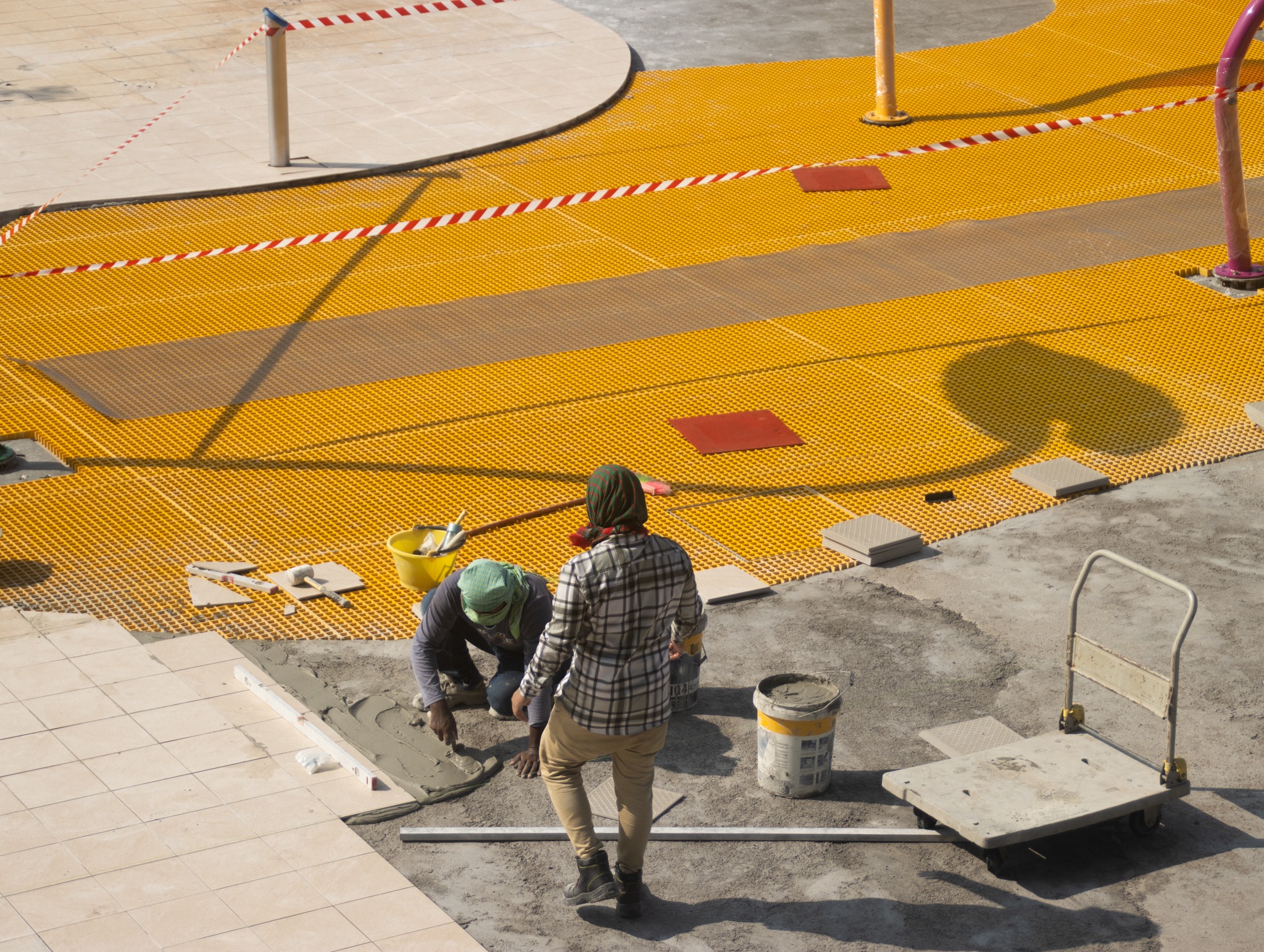
Construction workers laying cement at Jurong East swimming complex, working on new facilities for the public pool. Photo taken by Nathan Tong.
Even after COVID, numbers did not surge immediately. Mdm Tan mentioned that people were still worried about getting COVID. “Parents especially were worried about their kids getting COVID,” she added. She also said that it took a good two years post-opening to see the flow coming in.
Beyond the data, habits formed during the pandemic continue to influence behaviour. A generation accustomed to home workouts and gyms may no longer see swimming as their first choice. Annabelle, an 18-year-old student who recalls going to swimming pools before COVID happened, said, “public swimming pools are always crowded and sometimes not well-maintained, causing me to sometimes feel uncomfortable and grossed out.” She shared that she often turned to her condominium's gym or walked around the house to ensure she stayed active during COVID when restrictions weren’t so strict. She added that if there were themed pools or maybe a jacuzzi, she might go back.
Despite the dips and slow recovery, the future looks promising. As Mdm Tan puts it, “people are still flooding to the swimming complex, and parents are not worried about anything anymore.” The waves may not be as strong as before, but the ripples are far from over.