Is Charging to 100% Ruining Your Phone Battery?
A data-driven look at battery health, charging habits, and performance
Battery advice online can be confusing. One person says charging to 100% is completely fine, another person says you should stop at 80%. There are also those who say that overnight charging will ruin your phone. Let's take a look at the data of real usage to see which habits are linked to battery health.
We are using a sample of 50 devices with the following data:
Daily usage hours
Charging cycles
Avg charge limit %
Battery health %
Performance rating
Overheating issues
Does using your phone a lot actually destroy the battery?
Many people believe that using their phone for long hours every day will quickly destroy the battery. To test this idea, we looked at the relationship between daily usage hours and battery health.
The scatter plot shows that while battery health does drop as usage increases, there is no clear pattern between the usage hours and the battery health. Someone who uses their phone only for 4 hours daily can still see the battery health dropping significantly.
The key takeaway is that using your phone a lot by itself is not the main reason batteries degrade. Heavy usage may contribute over time, but it does not appear to be the biggest factor.
If heavy phone usage isn’t the main problem, then what is? One strong candidate is charging cycles. Charging cycle is how many times a battery has been charged over its lifetime. To explore this, we compared the number of charging cycles with battery health percentage.
The chart shows a clear pattern: as charging cycles increase, battery health steadily goes down. Phones with fewer charging cycles tend to have healthier batteries, while those that have been charged many times are much more likely to show significant battery wear.
This suggests that charging frequency matters more than screen time. Every full charge puts a small amount of stress on the battery, and over hundreds of cycles, that stress adds up.
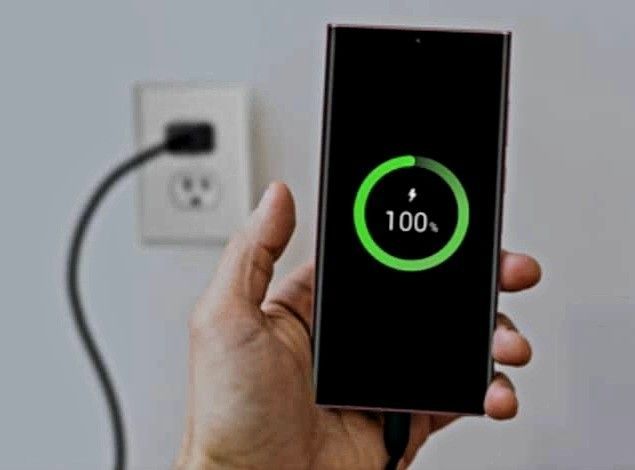
One of the most common advice on the internet is the "80% rule": you shuold stop charging your phone at around 80% to protect the battery. But is that really the case? To find out, we grouped devices based on their average charge limit. We have 3 groups: those that charge up to 80%, 81-90%, and 91-100%, and then compared their battery health.
The box plot shows somewhat a pattern. Devices that typically stop charging at 80% tend to have higher battery health than those that charge to full. While there is some overlap between groups, the overall trend suggests that charging to lower limits is related to better battery condition.
Sure, lower battery health will require you to charge your device more often. But is that all? Does battery health correlate with overheating and performance rating?
The chart shows a clear pattern. Devices with lower battery health are more likely to experience overheating, and these same devices also tend to receive lower performance ratings. When battery health is high, phones generally feel smooth and stable. As battery health drops, overheating becomes more common, and performance starts to suffer.
Firstly, we're only using 50 samples, which is quite small. Any analysis made needs to be checked further with larger sample size. Furthermore, this analysis shows pattern and relationships, but it doesn't prove cause and effect.
The data has some limitations. Firstly, it is cross-sectional, meaning it captures devices at a single point in time. We don't see how the same battery changes month by month. There is also no detailed temperature data, although we know heat plays a major role in battery degradation. Lastly, we also can't tell if the device was charged using fast charging or slow charging, which might have a different effect in battery health.
Thus, the findings should not be taken as an absolute truth.
In summary, these are some practical takeaways from the data findings:
Charging cycles matter, so avoid frequent short charging
Limit charge to ~80-90% if possible
Heat matters. Try to reduce overheating.
Modern devices are said to have an internal mechanism that will stop charging when it has reached 100%. But don't assume it exists in all the devices that you have.
This analysis is based on a dataset containing device-level information on usage behavior, charging habits, battery health, overheating, and perceived performance. Before analysis, the data was cleaned by checking for missing values and reviewing outliers. The analysis focuses on identifying relationships and trends, not proving direct cause and effect.
References
Laptop Battery Health & Usage Dataset https://www.kaggle.com/datasets/prince7489/laptop-battery-health-and-usage-dataset