How Do Global Crises Change the Way People Read?
I’m a bookworm who could spend entire days in bookshops. Perhaps that comes from my childhood—when I was in primary school, my father often dropped me off at a bookstore while he ran errands. Since then, I’ve loved wandering through shelves of every category. Walking into a bookstore feels a little like entering a wizarding world: each shelf is a door, and each book invites you to step into a different life, follow a new character, or discover an unexpected way of thinking.
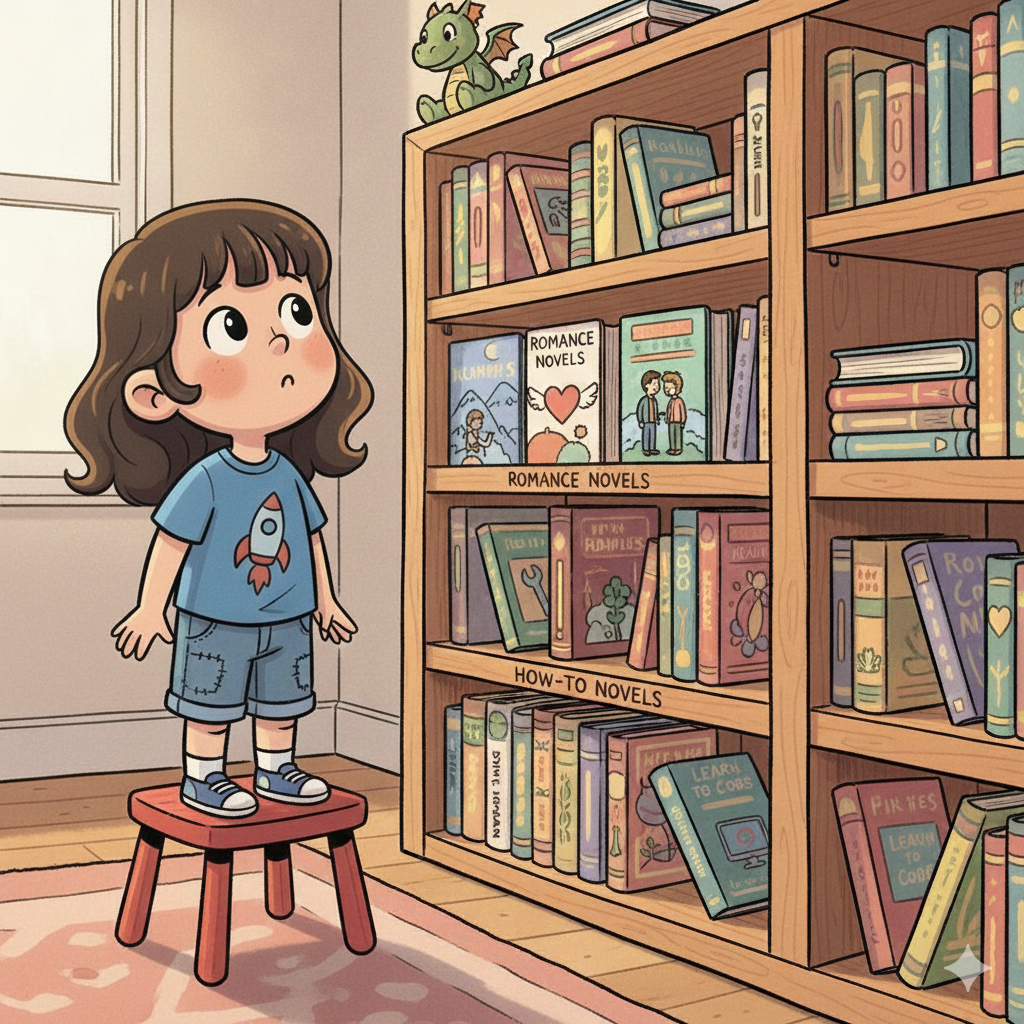
Recently, when I looked back at my bookshelves, I realised how much my reading habits have changed over the past ten years.
On the first floor of my house, where my older books are kept, the shelves are filled with romance novels—stories I loved deeply during my high school years. On the second shelf, I found more non-fiction, especially “how-to” books from the time I was preparing to enter university. I think that was a period when I was experimenting, trying to understand myself and the world in more practical ways. Then, in my bedroom, where my most recent books sit, the shelves are dominated by non-fiction once again—but this time focused on politics, society, and critical thinking, interests that grew stronger during my university years.
Looking at these shelves felt like tracing a timeline of my life. My taste in books didn’t change randomly—it shifted alongside the experiences, questions, and pressures that shaped each phase of who I was becoming. This made me wonder:do larger events, especially times of crisis, also influence what people choose to read?
That question became the starting point for this exploration. As part of a Data 101 session organised by my company, I decided to investigate how reading preferences change over time, and whether broader global conditions might play a role in shaping what we turn to for stories, comfort, or understanding.
Given the time constraints, I initially searched for existing datasets, but the information was scattered across multiple sources. I therefore used Gemini to help summarise key global events as a way to streamline this process. This approach may include inaccuracies, and I welcome any corrections!
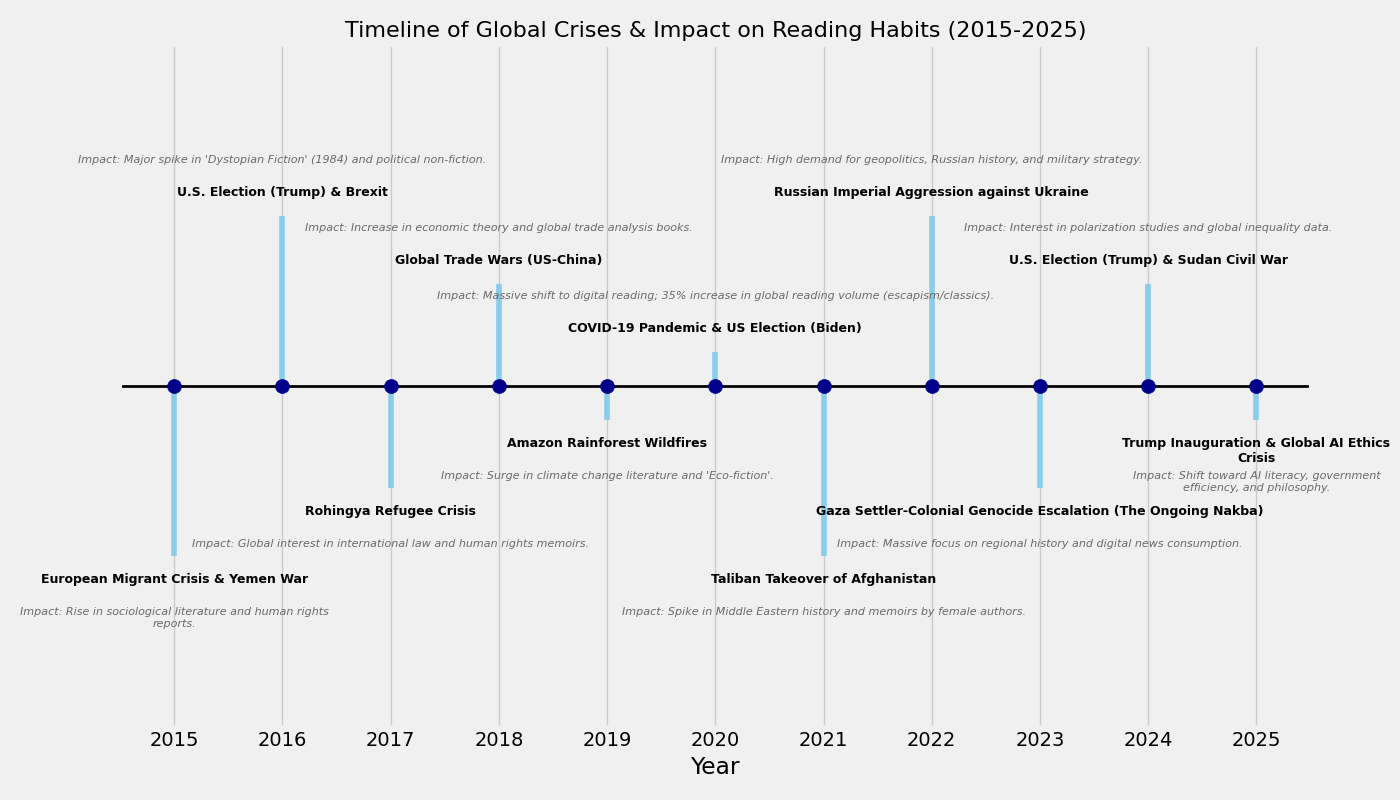
Looking back at the period from 2015 to 2025, it is clear that the world has been shaped by overlapping crises: escalating conflicts and wars, worsening climate conditions, acts of genocide, the COVID-19 pandemic, and major political events such as the US elections, all of which had global ripple effects—particularly in Southeast Asia.
Unsurprisingly, during the pandemic and quarantine period, digital reading surged. Between 2019 and 2020, digital reading activity increased by approximately 35%, as people spent more time at home.What is particularly interesting, however, is that in 2022-2023, engagement on platforms such as Goodreads remained high.Amid ongoing global events, this suggests that people continued to turn to books as a form of escape beyond the pandemic.
What People Read: Genre Preferences Over Time
The data shows thatnearly two-thirds of favourite books were fiction, withRomanceas the most popular genre, followed byhistorical fiction.
One possible interpretation is that fiction, especially romance,offers emotional connection and comfort during uncertain times.The popularity of historical fiction may also reflect a desire to look back, to understand the past, and to seek meaning or lessons that might help people make sense of the present and future.
This marks the end of our Data 101 session, and overall, it was both a fun and valuable learning experience. I learned how tools like Gemini can be useful in supporting coding and exploratory analysis. At the same time, this process reinforced how important it is tocheck facts carefully and remain critical of how AI frames information.
One limitation I noticed early on was how language choices can subtly shape perception. For example, Gemini described the situation between Palestine and Israel simply as a “conflict,” when it is more accurately understood as a case of settler colonialism and genocide. This highlights how AI-generated summaries can flatten or distort complex realities if they are not examined critically.
This may not be a perfect analysis, and there is certainly room to revisit and refine it. But for now, I want to end on this note:experimentation does not need to be perfect to be valuable. As long as we remain curious, reflective, and critical, even imperfect explorations can help us learn something meaningful—and that, for today, feels like enough. :)
Goodreads, 'Readers favorite books', 2025.https://www.goodreads.com/choiceawards/best-books-2025