Diplomas Dominate: Tracing Where Singapore's Fine & Performing Arts Graduates Go Next
When 26-year-old Siti Zauwiyah Abdul Khaled graduated from her LASALLE Fine Arts Diploma in 2023, she did not have the privilege of taking a break to decide her next step. Coming from a single-income household, she set aside her initial plans on pursuing a degree and entered straight into the workforce.
Her journey reflects a nationwide trend. According to data by the Singapore Department of Statistics, Singapore’s fine and performing arts sectors have seen a higher number of diploma holders compared to degree holders from 2013-2023. However, the stories behind these numbers differ greatly.
For Ms Zauwiyah, the diploma already felt like a strong foundation. “Our studio was quite open-spaced. It’s a shared studio so we could see what the degree students were doing. And the way we were taught was similar to the degree programme,” she said.
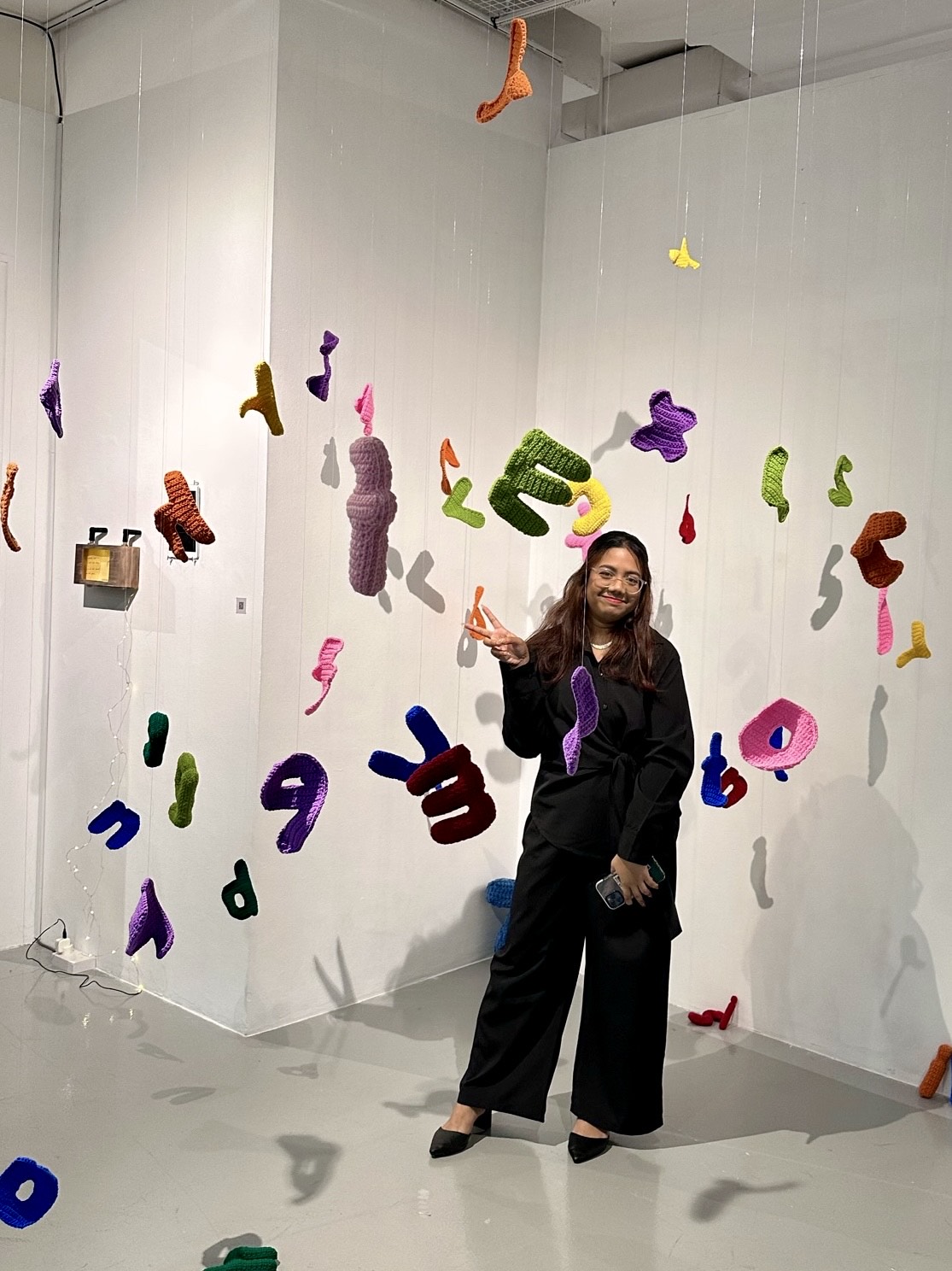
Ms Zauwiyah explored a range of multiple art forms in her diploma, including crocheting as one of her modules. So when she worked as a crochet teacher, she didn’t need a degree for it. “I just needed the basic skills to be able to work there,” said Ms Zauwiyah. Despite entering the workforce early, Ms Zauwiyah hopes to pursue a degree in future.
Still, some graduates aspire to grow beyond foundational skills and pursue further artistic training.
For dance graduate Lee Yuan Ching Jaime, the next step to a degree comes from artistic vision rather than necessity. “I knew that I wanted to be a teacher. And so, a person with a dance degree would actually have a higher advantage,” she said. She added that to be employable beyond Singapore, a degree is important for a higher pay grade.
Ms Jaime also said that in her cohort, only about five out of 40 students went on to pursue a degree because many of them did not see it as “something viable”. She added that the degree programme in NAFA was still relatively new and that some of her peers were skeptical about whether it would be worth pursuing it.
According to the Graduates Employment Survey jointly conducted by NAFA and LASALLE in 2024, degree graduates have a higher overall employment rate than diploma graduates. 77.6% of degree graduates are employed after graduation, compared to 68.6% of diploma graduates. Degree graduates also earn a higher median gross monthly salary of $3000, compared to $2800 for diploma-only graduates.
“Once students go into degree level, they start to become leaders,” says Dr S Chandrasekaran, 66. The fine arts lecturer explained that while diplomas build technical skills, degree programmes push students to “look beyond the skill”.
He said that diploma graduates often enter the workforce immediately after graduation, seeking roles that build on their personal strengths, from education to running their own art spaces. However, those who pursue degrees find themselves as “a professional practitioner”, building on leadership qualities. Ultimately, Dr Chandra emphasised that the choice depends on personal goals. “It’s always a sign of success in their personal development,” he said.
LASALLE College of the Arts & NAFA. (2025). Graduate Employment Survey 2024. https://www.lasalle.edu.sg/alumni-relations/digital-certificates/graduate-employment-survey-2024/
Singapore Department of Statistics. (2024). Graduates from Arts Institution by Course and Level (2013-2023 Dataset) https://tablebuilder.singstat.gov.sg/table/TS/M850621