Swimming Attendance Still Lagging Five Years After The Pandemic
Public pool visits have dropped by 17% since 2019, but swimming coaches and weekend crowds suggest the sport may still bounce back.
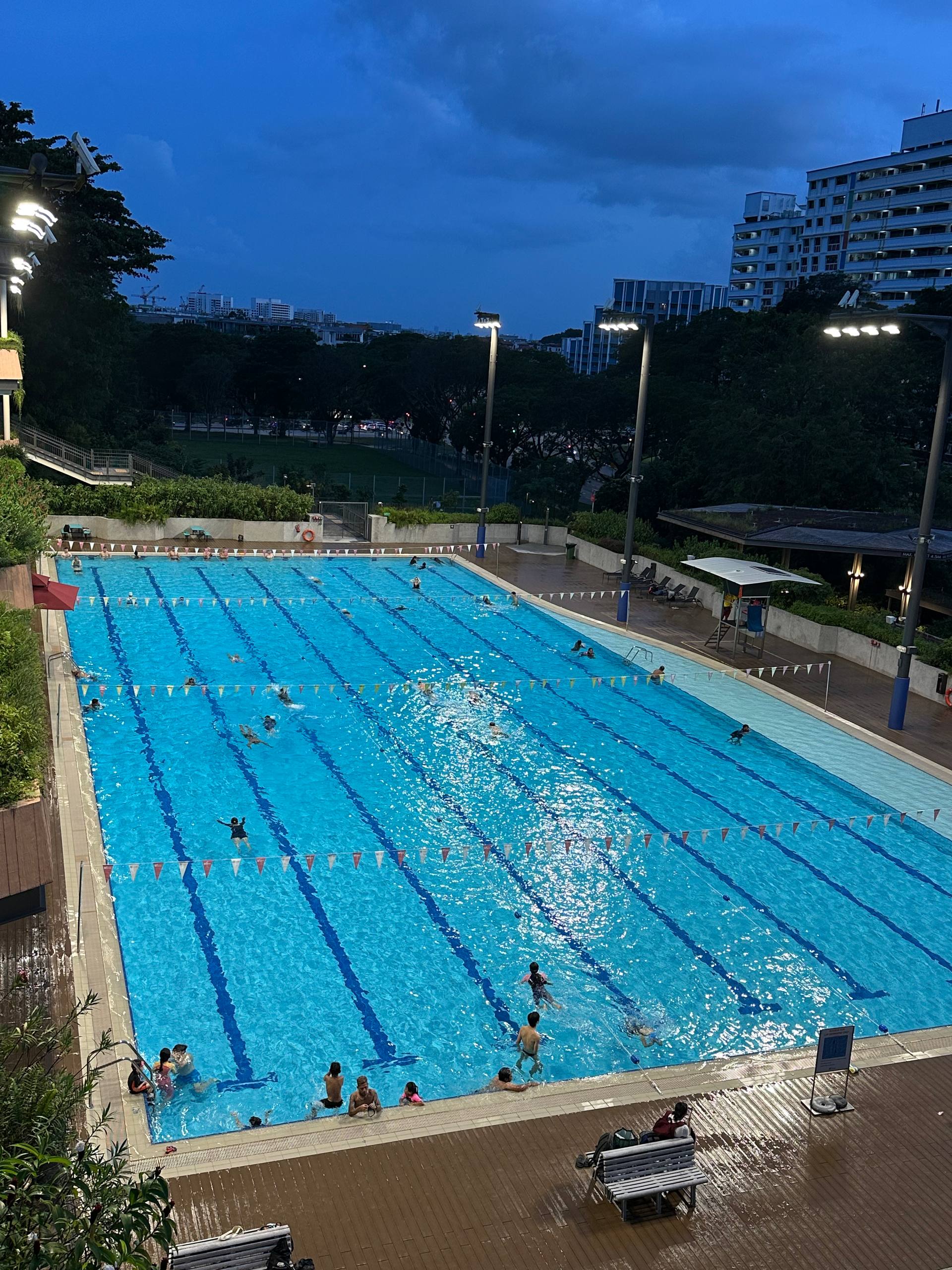
Photo by: Ding Sha Anne
From swimming four times a week to going for a dip only once every few months, Aden Tan, 19, is among many Singaporeans whose enthusiasm for the sport has waned.
A former school team swimmer who once trained and competed regularly, Mr Tan said the various restrictions and regulations during the multiple lockdowns pushed him towards other sports and hobbies, and even after public pools reopened, his interest in swimming did not.
He is not the only one. While a drop in participation during the Covid-19 pandemic was expected, swimming attendance has yet to rebound to pre-pandemic levels.
According to Sport Singapore, public pools saw 6.53 million attendances in 2019. In 2024, however - five years after the pandemic - attendance stood at 5.65 million, a 17.4% decrease in attendance.
This contrasts with sports such as basketball, volleyball and football, all of which had an increase in the number of bookings by 33.8%, 34.4% and 40.9% respectively, from 2019 to 2024.
“I do not think [swimming] holds the same appeal [as before] because during lockdown, most people found new interests like gaming so swimming became less interesting,” said Mr Tan.
But gaming is not the only reason for the drop in pool usage.
Michael Soong, 57, a swimming coach, said the decline cannot be attributed solely to but rather it is “because of [the economy],” he said, noting that rising costs and tighter household budgets may have made regular lessons or pool visits less of a priority for some families.
“Regardless of income levels, 90% of people in Singapore feel the pressure of inflation, and 42% face a significant impact on their ability to cover expenses,” according to a news release by Sun Life, a global financial-services and life-insurance company.
“[It is] inflation and cost of living, job insecurity and parents trying to prioritize what is important for the kids. And what is important? Tuition. Not swimming, not [sports],” said Mr Soong.
However, things are looking up for the sport. “I would say [that] it's quite normal already, actually. If you were to step in the public pool on a Saturday [or a] Sunday, you [would] really be surprised to see the crowd,” said Mr Soong.
Mr Soong remains optimistic, noting that swimming is “not just a sport, but a life skill”. Beyond recreation, it is essential for safety, general fitness and, for many Singaporeans, a requirement during National Service. These factors give the sport a relevance that extends beyond shifting interests. Furthermore, Singapore’s national athletes like Joseph Schooling - the country’s first Olympic gold medallist, continue to inspire and draw new swimmers to the pool.
Even now, Mr Soong’s classes have not seen a decline. Before the pandemic, he coached between 60 and 80 children, and the numbers remain similar today. For him, participation has been steady. “Speaking for myself, there’s no [change]. In fact, it has been stable,” he said.