From Campus to Career: Why Singapore’s Creative Graduates Are Skipping the Degree Route
For 22-year-old interior designer Ashley Foo, choosing work over a degree felt like the most practical step after graduating from LASALLE in 2023. She now works full-time at a design firm, where she handles client work, project timelines and day-to-day design tasks. These were the skills she believed she would not learn as quickly in a classroom.
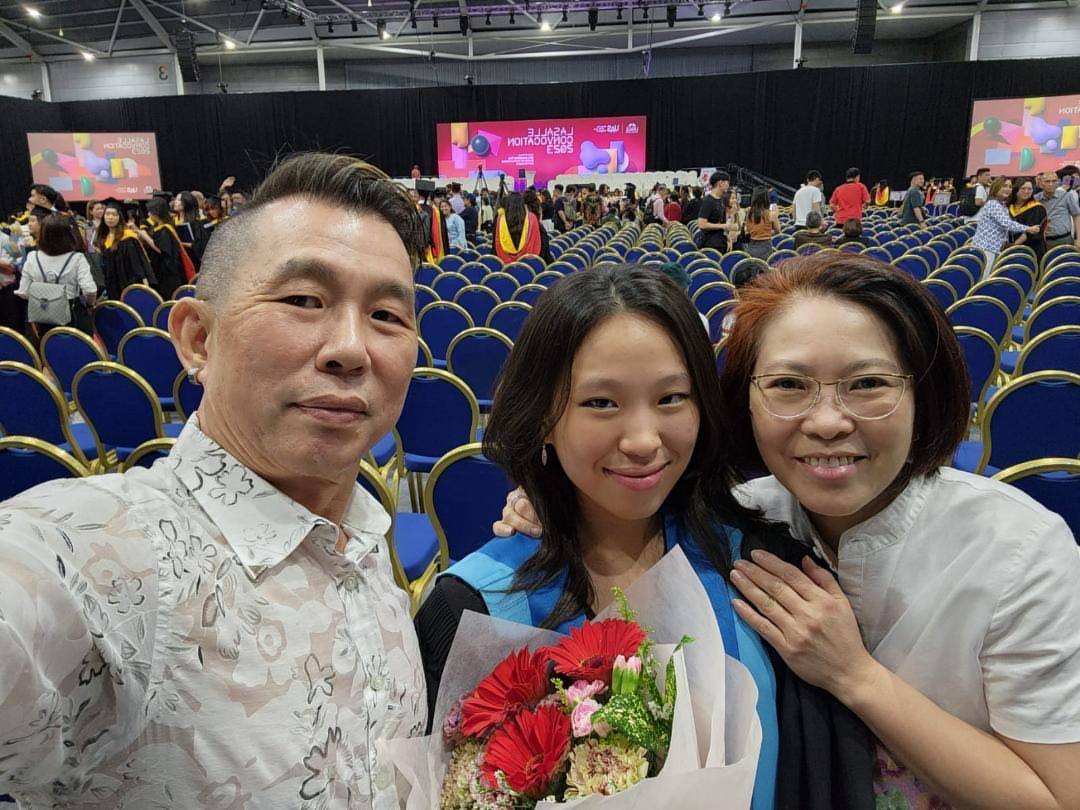
Cost was a major reason she hesitated to pursue a degree. “Honestly, the cost of a degree was a big factor… I didn't want to commit to a degree unless I was 100% sure it was worth it." She explains that tuition fees can reach around $10,000 even after subsidies, with course materials costing even more.
Time was another concern. “I didn’t want to spend a few more years in school”. she added. “It just made more sense to begin working first.”
Like many diploma graduates in the design industry, Ashley believes a strong portfolio matters more than academic qualifications. “Most employers and clients definitely look at your portfolio first” she says. “A degree mainly affects your starting pay or helps you qualify for certain positions on paper, but when it comes to actually getting hired, your portfolio speaks louder.”
According to the Graduate Employment Survey from LASALLE, the median starting pay for diploma holders in visual and applied arts is about $2,100, while degree holders earn around $3,100. Although the difference is noticeable, Ashley says it wasn’t enough to sway her.
Among her peers, skipping a degree is “pretty common”, with many choosing work or freelancing immediately after graduation.
Design & Applied Arts Diploma and Degree Comparison in Singapore (2005-2023)
New figures from the Singapore Department of Statistics indicate that diploma graduates continue to form the majority in design and applied arts. Degree graduates first appeared in 2013 with 242, rising to 323 in 2023, but diploma completions remained higher at 552 that year.
Industry professionals share similar views. Ms Ivy Chong, 25, an interior designer, believes that hands-on learning is often what shapes a designer most. She entered the workforce after completing her final-year project at Temasek Polytechnic in 2022, starting work “3 days later… just to challenge myself”.
Having spent five years studying design across ITE and polytechnic, Ivy felt that further academic pathways such as architecture required “a lot more certificates that unforeseen how long you are going to be studying.” Instead, she preferred gaining practical experience and becoming financially independent.
For graduates deciding between work and further study, Ivy advises weighing finances and personal readiness. “If you don't have a passion to study, I'll say work first, gain more experience, then go back to studying.”
While she acknowledges that not having a degree may limit opportunities in some firms, Ivy emphasises that a strong portfolio can close that gap over time. “Most things can be learnt through hands-on work.” She added.
For her, choosing work early is not about opting out, but about building confidence and practical skills before deciding whether further study is necessary.
Keyword Tags:
Design Education Singapore, Arts Graduates Singapore, LASALLE Graduates, Diploma vs Degree, Interior Design Workforce, Graduate Employment Survey, Design Portfolio Importance, Youth Career Decisions, Education Costs Singapore